Freelance Web Design Roadmap: From Zero to Consistent Income
A step-by-step roadmap for freelance web designers, covering tool selection, niche positioning, portfolio building, outreach, and scaling to an agency.
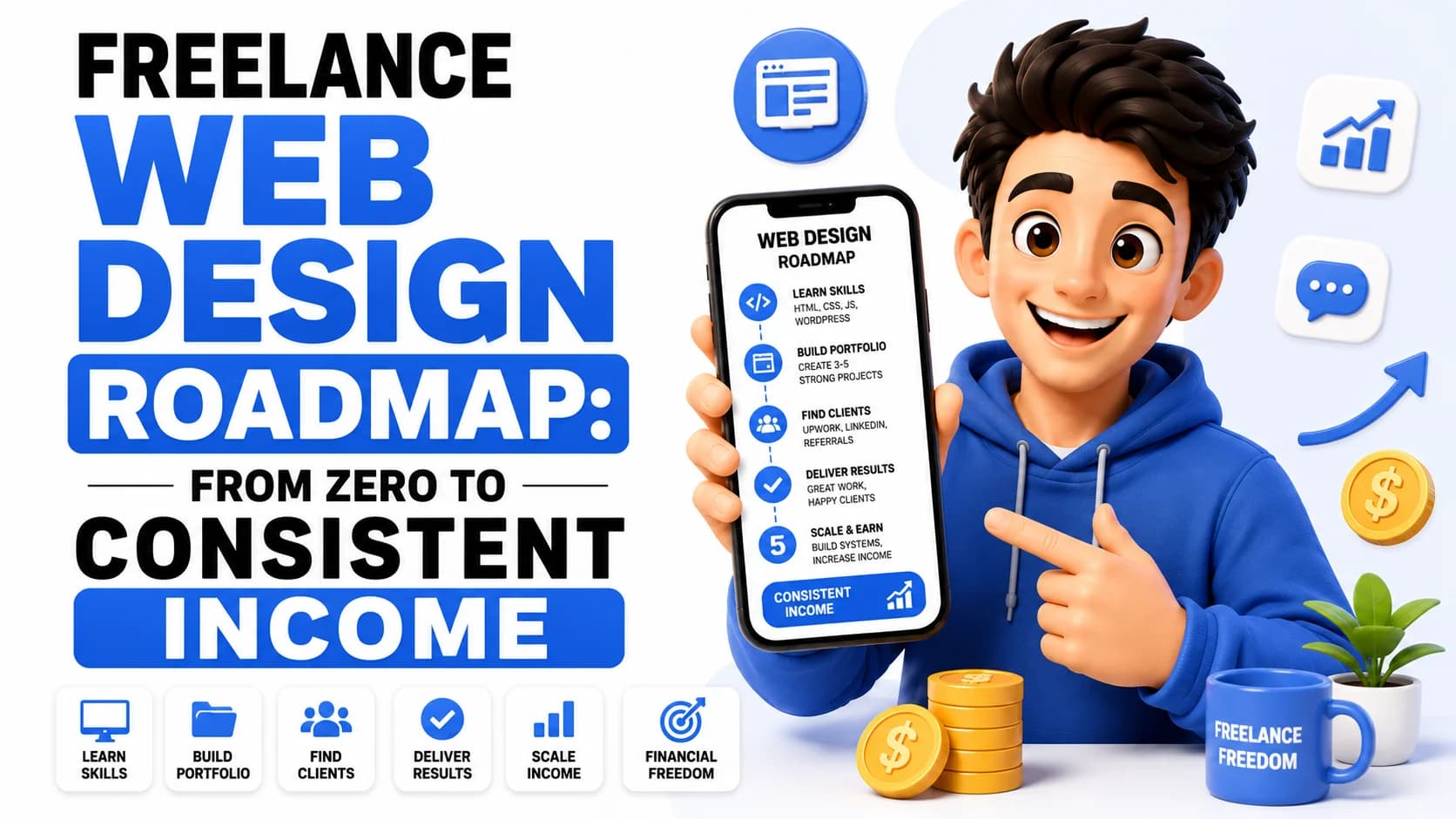
Most beginner web designers don't stall out because they lack talent; they stall out because they skip steps or spread themselves across too many directions at once. In this blog, we will walk through a practical sequence, from picking the right tools to landing paying clients, that avoids the most common points where beginners give up.
Step 1: Learn the Core Tools Properly
Before anything else, the foundational skill stack matters more than jumping straight to client work. Figma is the standard starting point for learning core design principles, layout, hierarchy, and spacing before moving into development.
From there, the choice is generally between Framer and Webflow for turning designs into functioning websites without needing a separate developer. Framer tends to be the easier entry point for beginners specifically because its interface closely mirrors Figma's, which shortens the learning curve considerably. Webflow is a genuinely powerful, more established no-code tool, but its interface differs more substantially from Figma's, making it a steeper initial climb for someone just starting out. Many agencies still design in Figma first regardless of which development tool they use downstream, which makes Figma fluency valuable no matter which platform gets chosen for the build phase.
Free, high-quality resources exist for learning both paths. Webflow University, produced directly by Webflow, is a genuinely solid, free way to learn that specific platform in depth.
Step 2: Choose One Niche and Actually Stick to It
This is where a lot of beginners lose momentum without realizing it. Chasing multiple unrelated directions at once, web design one month and something else entirely the next, prevents any single skill or client base from actually compounding. A common assumption is that targeting a broader range of industries increases the odds of landing a project, but the opposite tends to be true: vague, unfocused positioning makes it genuinely harder for a potential client to see why they should choose a specific designer over a generalist alternative.
Committing to one niche, and building a clear, specific positioning statement around it, gives potential clients an immediate, obvious reason to reach out compared to a portfolio that could belong to anyone.
Step 3: Research the Niche Directly
Once a niche is chosen, understanding it deeply matters more than assuming what that market needs. Spending time in communities, forums, industry-specific groups, wherever people in that niche actually gather, and talking directly with people in that space surface real pain points that generic research or guesswork won't reveal. This is a fairly universal business principle outside of web design too: understanding a market well enough to solve a real problem requires actually talking to people inside it, not just observing from a distance.
Step 4: Build Concept Projects Before Real Client Work Exists
For a beginner without existing client work, or someone whose past work doesn't reflect their current skill level, concept projects, self-directed design work built specifically to showcase style and capability, are the most practical way to demonstrate skill without waiting for a paying opportunity first.
This is also the point where a meaningful number of beginners quietly give up once they realize building genuinely strong concept work takes real, sustained effort rather than a quick weekend project. That resistance is a normal part of the process, not a sign that freelancing isn't a viable path; the people who push through this specific friction point are disproportionately the ones who go on to build something sustainable.
Step 5: Build a Simple, Focused Portfolio
A portfolio doesn't need to be complicated to be effective. The strongest portfolios let the concept projects themselves do most of the communicating, rather than burying good work under unnecessary complexity or excessive design flourishes. Simple doesn't mean underwhelming; it means clear, well-presented work without distraction. Since a portfolio is often the first impression a potential client, agency, or recruiter forms, prioritizing clarity and quality over quantity or complexity tends to convert better.
Step 6: Outreach Beats Waiting to Be Found
Many beginners freeze at the outreach stage, largely out of a fear of rejection that feels disproportionate once actually confronted. Rejection is a normal, expected part of client acquisition, not a signal that freelancing isn't working. Proactively reaching out to potential clients, rather than depending entirely on inbound interest or a strong existing social media presence, is one of the more reliable paths for a beginner without an established audience already finding them organically.
Learning to do outreach well also builds a broader professional network over time, reducing long-term dependence on any single client-acquisition channel.
Step 7: Automate, Then Scale
Once outreach and client acquisition start generating consistent results, doing every step manually forever becomes a bottleneck. Automating parts of the outreach process, whether that's templated follow-ups, scheduling, or lead qualification, frees up time that would otherwise go toward repetitive administrative work.
The natural next stage beyond steady freelance income is scaling into a small agency or team. At the point where a designer is fully booked and still trading time directly for money, bringing on additional designers or developers allows the business to grow beyond what one person's available hours can support, gradually detaching income from direct hands-on work.
Where Beginners Commonly Stall Out
- Learning tools indefinitely without moving into niche selection or actual client work
- Spreading focus across multiple unrelated directions instead of committing to one niche
- Giving up during the concept-project phase once real effort is required
- Avoiding outreach out of fear of rejection, relying entirely on inbound interest instead
- Never automating repetitive tasks, which caps how much the business can eventually scale
Freelancing & Careers · October 24, 2026
Back to the front page