Amazon Influencer Program 2026: How to Actually Get Paid for Reviews
Learn how the Amazon Influencer Program and onsite commissions really work in 2026, including commission rates, approval requirements, and how to earn more.
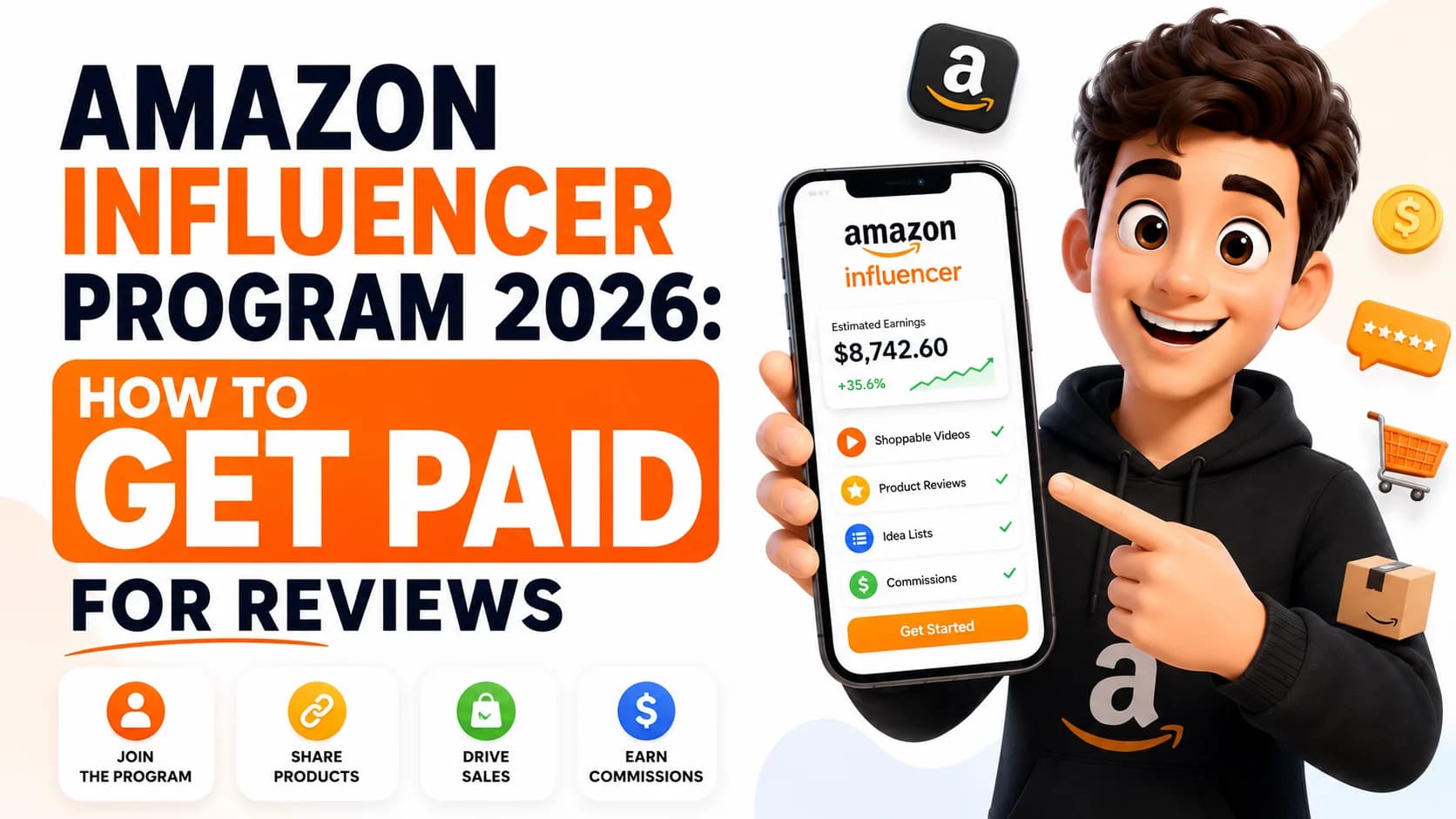
Reviewing products you're already buying can genuinely generate commission income, but most people entering the Amazon Influencer Program don't realize how the system is actually structured or where the real money sits inside it. In this blog, we will walk through how approval actually works, what commissions realistically look like, and how third-party platforms change the math significantly.
How the Program Is Actually Structured
Amazon runs two related but distinct programs. Amazon Associates is the standard affiliate link program, open to almost anyone with a website or social presence. The Amazon Influencer Program sits on top of that, adding a personal storefront and eligibility for on-site video placement, where review videos can appear directly on Amazon product pages themselves rather than only on external links a creator shares.
Getting approved for the Influencer Program itself has no published follower minimum, but in practice, an active, engaged social account—YouTube, Instagram, TikTok, or Facebook—meaningfully improves approval odds. TikTok specifically tends to build engagement quickly for newer accounts, which is part of why it's often recommended as a starting platform for anyone without existing traction elsewhere.
The Onsite Commission Challenge
Getting into the base influencer program isn't where the real earning potential sits. Onsite commissions, where review videos actually appear on product pages and earn from Amazon's own shopper traffic, require a separate approval step: uploading three product review videos that meet Amazon's content guidelines, generally in the 60 to 90 second range, focused on genuinely helping a shopper understand the product rather than functioning as a straightforward sales pitch.
Here's the detail most guides skip: there are only three total attempts allowed for onsite approval. If all three submitted videos fail review, the entire path to onsite commissions closes, and reapplying means starting the whole influencer program process over from scratch. That makes the first three videos worth treating carefully rather than rushing out quickly, since a failed attempt has real consequences beyond just a delay.
What Amazon's Standard Commissions Actually Look Like
Amazon's offsite commission rates vary by product category, generally ranging from about 1% to 10%, with most everyday categories landing closer to 3% to 4%. Luxury beauty tends to sit at the higher end, while categories like gift cards, alcohol, and vehicles pay no commission at all.
The standard cookie window, the time a shopper has after clicking a link for a creator to still earn credit, is 24 hours. There's a lesser-known extension worth knowing: if a shopper adds the item to their cart within that window, the tracking window extends to 89 days from the original click, even if the purchase happens weeks later.
Why Third-Party Platforms Pay Significantly More
Platforms like Levanta exist specifically to address Amazon Associates' low native commission rates. Levanta connects creators directly with brands selling on Amazon, and commissions negotiated this way average around 20%, with some brand partnerships reaching 50% or higher in specific categories. The tracking window is also considerably longer, generally 14 days rather than Amazon's standard 24 hours, giving significantly more room for a purchase decision to actually happen after the initial click.
Access to these platforms typically requires an existing, established audience, commonly cited around 10,000 followers for full marketplace access, though smaller creators can sometimes access select brand partnerships depending on the platform's current criteria. Signing up is generally free, and once approved by individual brands, a creator can generate direct affiliate links, request product samples, and, in some cases, negotiate flat-fee arrangements on top of standard commission, effectively getting paid for both the content itself and resulting sales.
Requesting Samples and Direct Brand Relationships
Once partnered with specific brands through a platform like this, requesting a free sample in exchange for a review is often built directly into the workflow, giving a creator genuine, hands-on product experience at no cost while still earning commission on resulting sales. Some brands go further, offering direct messaging to negotiate custom terms, seasonal promotional placements, or bonus structures tied to high-traffic shopping periods like major sales events.
Choosing Products Strategically
Reviewing products already owned is the most practical starting point, since it requires no upfront spending and produces more genuine, detailed content. Prioritizing higher-priced items generally produces stronger commission totals per sale, though lower-priced products with a strong commission rate and consistent purchase volume can perform surprisingly well too. Checking a product's recent purchase volume on its Amazon listing before committing time to a review is a reasonable way to gauge whether demand already exists, rather than guessing.
What Actually Makes a Review Convert
The strongest-performing reviews use real, specific storytelling: how the product fits into daily use, what works well, and what doesn't, rather than an overly polished, sales-pitch tone. Amazon's own guidelines for onsite video approval reflect this directly, favoring content that helps a shopper understand a product clearly over content that reads as a straightforward advertisement.
Authenticity also affects long-term trust more than any individual video's performance. A review that acknowledges a genuine downside or limitation of a product tends to build more credibility than one that oversells everything positively, which in turn makes future recommendations from the same creator more likely to convert.
Building a Recognizable Niche Without Over-Narrowing
Focusing content around a specific category such as tech, beauty, home goods, or whatever genuinely matches personal interest and expertise helps build a recognizable identity that audiences can follow and trust over time. That said, reviewing occasional products outside a primary niche is still worthwhile, since it's difficult to predict in advance which specific review will end up performing consistently well.
Creator Economy · October 24, 2026
Back to the front page