TikTok Shop Affiliate Program 2026: How It Actually Works
Understand how the TikTok Shop affiliate program works in 2026, from follower requirements and commission rates to what actually makes videos convert.
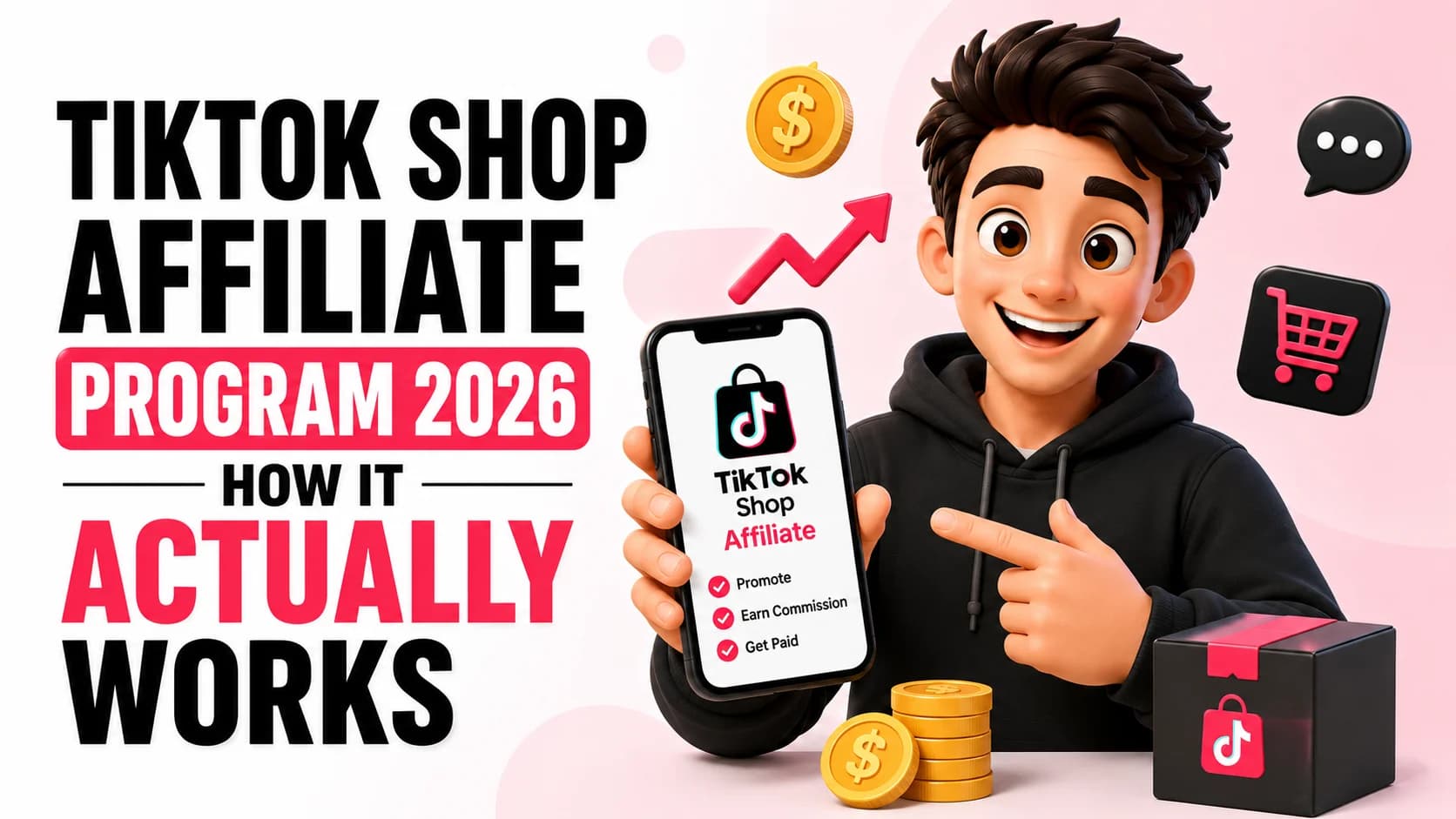
TikTok Shop's affiliate program gets talked about in extremes, either as a fast path to high income or dismissed entirely once a loophole or trend fades. Neither framing is particularly useful. In this blog, we will break down how the program actually functions in 2026, what's changed around account access, and what genuinely separates a video that converts from one that doesn't.
How the Program Actually Works
TikTok Shop's affiliate structure lets creators promote products listed by third-party sellers and earn a commission on sales attributed to their content, without needing to hold inventory, manage shipping, or run their own store. Sellers set the commission rate on individual products and creators choose which products to feature through videos, live streams, or their profile's product showcase.
Account Types and Follower Requirements
Requirements here shift often and vary by region, so treating any specific number as permanent is a mistake. As of the current rules, independent Affiliate Creators generally need around 1,000 followers to apply in most markets, a meaningful drop from the 5,000-follower threshold that used to be standard. Creators under 5,000 followers typically get placed into a creator pilot program for at least 30 days, which restricts which products can be promoted and limits posting volume until the account builds more history.
Separately, Official Shop Creators and Marketing Creators, accounts linked directly to a seller's business account, generally face no follower minimum at all, since the business relationship itself satisfies TikTok's verification requirements. This route still exists in some form, though it now comes with tighter restrictions on product access and posting compared to how it functioned in the past, and TikTok has actively worked to close gaps that let large volumes of accounts bypass follower requirements entirely. Anyone considering this path should expect more limited functionality than a fully qualified affiliate account, not full access.
Every path requires identity verification, typically a government-issued ID, along with basic tax and payout details before commissions can be withdrawn.
Commission Structure: What to Actually Expect
Commission rates on TikTok Shop generally range from 5% to 50% depending on the seller and product, with an average closer to 13%. Low-priced products naturally produce small commissions even at a high percentage rate, which is why higher-ticket items, something in the $30 to $100 range with a meaningful per-unit commission, tend to produce more noticeable earnings per sale than cheaper impulse items, even when the percentage looks similar on paper.
One detail worth knowing: locked-in commission rates typically hold for a period after a seller lowers them, so a rate reduction doesn't immediately affect a creator's existing promotional content, though removing a product from an active showcase generally resets that protection.
Why Market Matters More Than Most Creators Expect
TikTok Shop's performance varies dramatically by region, and this is one of the more consistent patterns across markets. The US market has significantly deeper TikTok Shop adoption and higher buyer intent on the platform itself, while several other markets, the UK included, still see shoppers default to established platforms like Amazon rather than buying directly through TikTok. A creator producing identical content can see meaningfully different results purely based on which regional marketplace their account is tied to, largely independent of content quality.
This matters practically because account registration is generally tied to the creator's actual identity documents and location, not to whichever market seems most lucrative, so it's worth understanding this constraint going in rather than assuming market access can be freely chosen.
What Actually Makes a Video Convert
The single biggest mistake creators make coming from platforms like YouTube is carrying over a talking-head review format. That style doesn't translate well to TikTok Shop content, where the strongest performing videos tend to be simple, visual product demonstrations, showing an item solving a specific problem, often without any dialogue or even the creator's face appearing on screen at all.
A hook built around curiosity, a visible before-and-after, or a problem being solved in real time consistently outperforms a spoken explanation of why a product is good. The content needs to stop someone mid-scroll within the first second or two, and a clear visual demonstration does that far more reliably than narration.
Product Selection Is the Real Bottleneck
Picking a random item to review rarely produces results. Two factors matter far more than product quality alone: timing and pricing. A product that's already past its trend peak, one that's been heavily seen and reviewed already, tends to underperform regardless of how good the video itself is. Getting in while a product is still gaining traction, rather than after it's saturated the platform, matters significantly.
Pricing plays an equally large role. A product available at the same price on Amazon gives a viewer no reason to buy through TikTok Shop instead. A visible discount, a bundle deal, or a limited-time price drop gives a concrete reason to act immediately rather than comparison shop elsewhere first.
Stacking Content Across Platforms
Many products listed through TikTok Shop's affiliate marketplace are also available through other affiliate programs, most notably Amazon's influencer program. Requesting a free sample through TikTok Shop, when available, can produce content usable across a TikTok video, a YouTube review, and an Amazon influencer post simultaneously, turning one free product into three separate pieces of monetizable content.
Realistic Expectations
Public success stories around TikTok Shop affiliate incomes are real in some cases, but they represent a small fraction of participants, and results vary enormously based on market, content style, and product selection. Most creators starting out should expect a slow, inconsistent ramp rather than an immediate breakout, and a single viral video, generally understood as clearing several hundred thousand views at minimum are what actually moves the needle financially, not a steady stream of modest-performing content.
Creator Economy · October 24, 2026
Back to the front page