Affiliate Marketing for Beginners: A Real Starting Guide
A beginner's guide to affiliate marketing, covering Amazon Associates, ClickBank, getting your first link, and the legal disclosure rule nobody mentions.
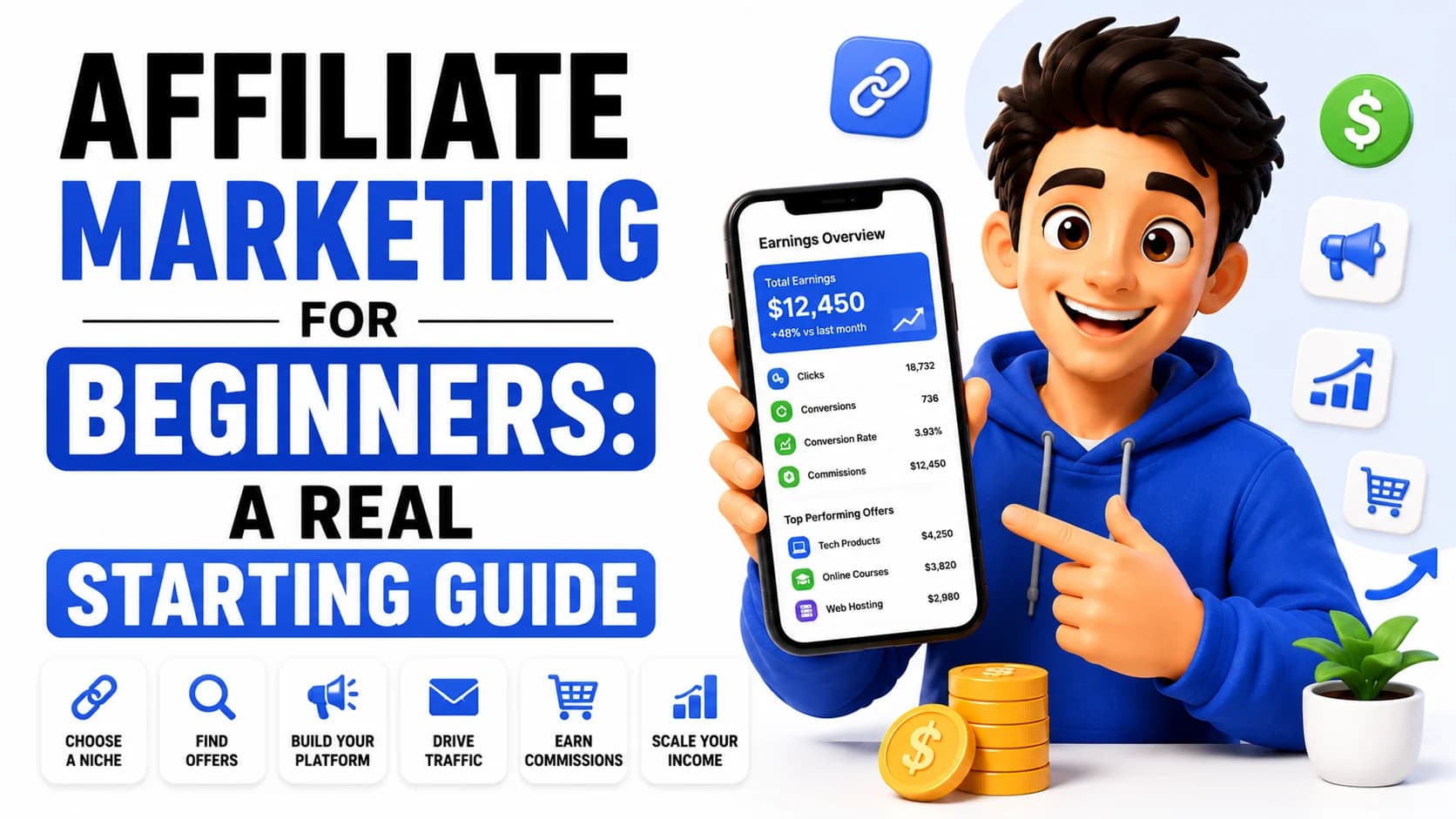
Affiliate marketing sounds complicated until you actually break it down. Join a network, find a product you actually believe in, get your link, share it, and get paid when someone buys. That's genuinely the whole loop. The hard part isn't understanding it. It's picking the right network to start with and actually getting people to click. Let's go through it properly.
Step 1: Pick a Network
Google "affiliate networks" and you'll get a wall of names: ClickBank, JVZoo, ShareASale, GiddyUp, and a bunch of others. For a total beginner, two are worth starting with: Amazon Associates and ClickBank. They work pretty differently, so it's worth understanding both before picking one.
Amazon Associates
Amazon's program is the easiest one to get into, full stop. Scroll to the bottom of any Amazon page, and in the footer you'll see "Make Money with Us." Click through to "Become an Affiliate" to see the sign-up flow.
One thing that trips people up: Amazon asks for a website during sign-up. You don't need a fancy site for this. A Facebook profile or a YouTube channel works fine as your "website" when you're just getting started.
Here's the catch with Amazon, though. Commissions aren't huge. Rates run somewhere between 1% and 10% depending on the product category. So if you're recommending a $20 book, you're looking at maybe a dollar, sometimes less. It adds up with volume, but don't expect big checks from single low-priced items.
ClickBank
ClickBank's been around since 1998, based out of Boise, Idaho, and a huge number of people have made their very first affiliate commission through it. The big difference from Amazon: ClickBank mostly deals in digital products, courses, e-books, software, and that kind of thing, and commissions run way higher, often 50% to 75% per sale. That's the tradeoff. Lower trust factor than Amazon (since it's less of a household name), but way bigger payouts per sale.
Head to the Affiliate Marketplace once you're signed up and you'll see thousands of products, each one showing exactly how much you'd earn per sale. Worth browsing a few categories just to get a feel for what's out there before picking anything.
Step 2: Actually Pick a Product
Don't just grab whatever pays the most. Pick something you'd actually recommend to a real person, a product you use, believe in, or genuinely think solves a problem. This matters more than people expect, because recommending something you don't actually care about tends to show, and it shows in how people respond too.
For a first demo, Amazon's a good place to practice since sign-up is instant. Search for a product, and once you're approved, you'll see something called SiteStripe appear right on the product page. Click "Get Link," and boom, you've got your affiliate link, a short one, easy to share, and it quietly tracks that the sale came from you.
Step 3: Share the Product
This is where most beginners freeze up. You've got the link. Now what? A few places that genuinely work for a first attempt:
- A short, personal email to someone you know who'd actually want this
- A genuine post on your own Facebook profile
- Comments on relevant YouTube videos (when it's actually relevant, not spam)
- Instagram, either in a post or your bio link
The through line across all of these is that personal recommendations beat anything that looks like an ad. A short Facebook post that reads like you're genuinely telling a friend about something works a lot better than something that screams "sponsored content." Write it as you'd actually talk, not like a billboard.
The Legal Part Nobody Mentions
Here's something that gets skipped in a lot of beginner guides, and it shouldn't be. If you're recommending a product and earning a commission from it, you're legally required to disclose that in most countries; the FTC requires it in the US, and similar rules exist elsewhere. It doesn't need to be complicated. A simple "I may earn a commission if you buy through this link" somewhere visible in your post, email, or video description covers it. Skipping this isn't just a technicality; it's an actual legal requirement, and getting flagged for it can hurt your standing with the platform and the affiliate network both.
Affiliate Marketing · October 24, 2026
Back to the front page