Digital Marketing for Beginners: A Step-by-Step Starting Guide
A clear, step-by-step breakdown of what digital marketing actually is, the main channels, and how to start building a real strategy from scratch.
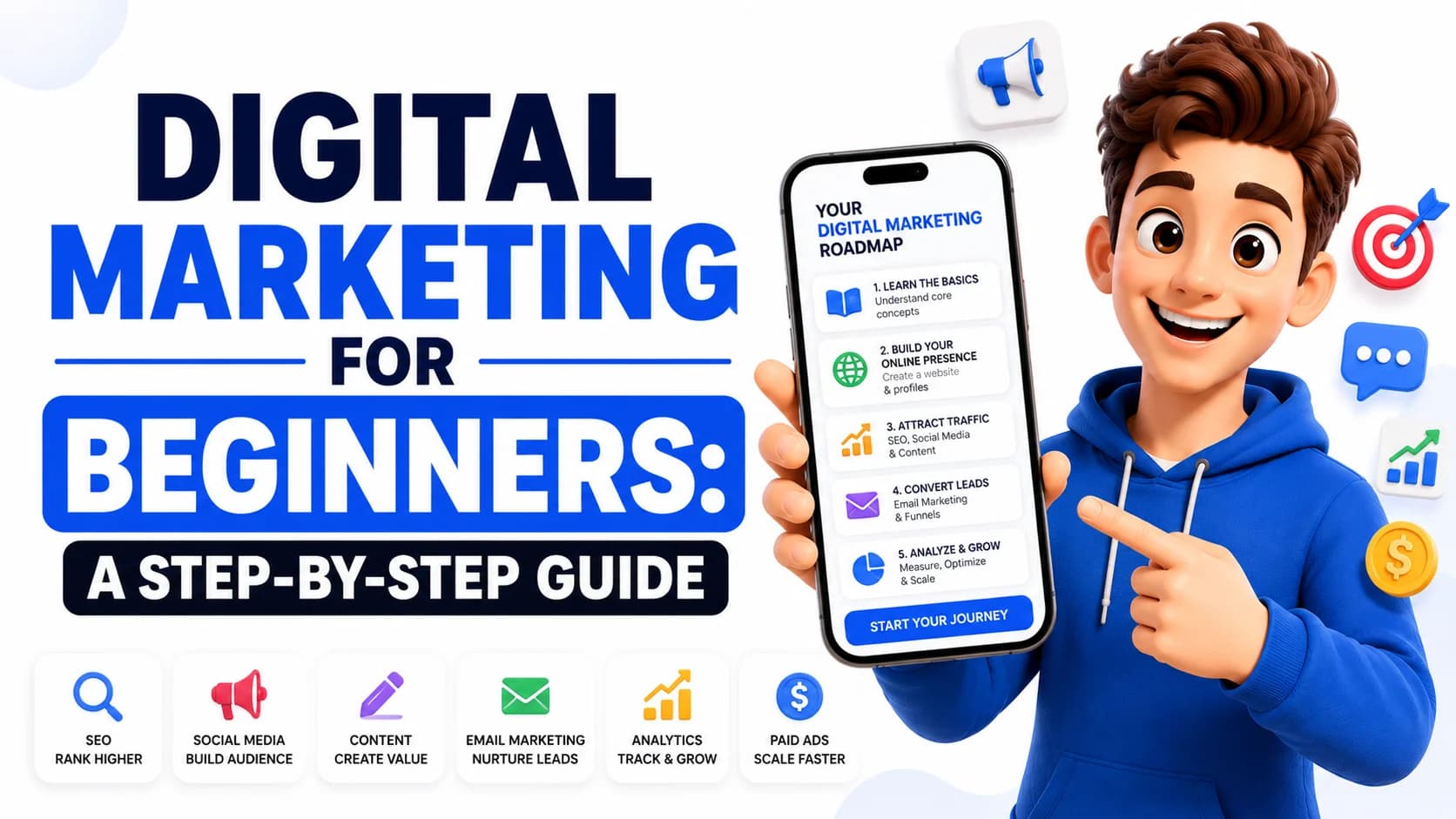
Digital marketing gets thrown around so much that most people can't actually explain what it is when you ask them directly. So let's clear that up first, then walk through how to actually start doing it.
What Digital Marketing Actually Is (And Isn't)
First thing to clear up: digital marketing is not the same thing as a digital product. Selling a course online doesn't automatically mean you're doing digital marketing. You could sell physical items, digital downloads, or a service, and digital marketing is just how you get the right people to actually see and want that thing. One's about what you're selling. The other's about how you get it in front of people.
Marketing, at its core, has always been about figuring out what people want and offering them a solution. Postcards, billboards, door-to-door—that's marketing too, just not digital. Add "digital" to the word, and you're just talking about doing that same thing online instead.
A Quick Word on MRR Courses
Worth mentioning here, since it comes up a lot. MRR stands for master resell rights, courses that let the buyer turn around and resell the same course as if it were their own. A lot of these get marketed as "learn digital marketing," but most of them teach you almost nothing except how to resell the course itself. That's a different thing entirely from actually building a business or learning a real skill. If you want something sustainable, either build your own product or resell things through a legitimate setup, not just flip a course you never actually made or improved.
The Main Channels
Digital marketing isn't one thing; it's a handful of different approaches, and most businesses end up combining a few:
- SEO (organic search)
- Content marketing
- Social media marketing
- Paid advertising
- Affiliate marketing
- Influencer marketing
Any of these can promote a digital product, a physical one, an event, a course, a coaching program, whatever. The method doesn't really care what you're selling.
Why "Everyone" Is the Wrong Audience
Here's the thing that trips up almost every beginner: trying to market to everyone means marketing to no one. The moment you get specific about who you're actually talking to—business owners, new parents, people in a specific industry—your marketing gets dramatically more effective. A specific audience usually has a specific problem or goal, and your job is figuring out exactly what that is before you try to sell them anything.
Doing a bit of research upfront—what are people actually searching for, what solutions are already in demand, and who's actively looking for help—saves a ton of wasted effort later.
SEO: Getting Found Without Paying for Ads
SEO, search engine optimization, is the organic side of digital marketing. It's about using the right keywords and phrases strategically so search engines (and marketplace search, like Etsy's) actually understand what your content or listing is about and rank it accordingly. Done well, it means your stuff shows up right when someone's actively searching for exactly what you offer.
For Etsy sellers specifically, keyword research tools like Sale Samurai or eRank are pretty commonly used. You type in a product-related phrase and get estimated monthly search volume and related keyword suggestions, which takes a lot of the guesswork out of writing listings that actually get found.
Content Marketing: Getting Discovered by People Who Don't Know You Yet
Content marketing means putting stuff out there such as videos, posts, and images on platforms where new people can stumble onto your brand for the first time. It's how someone who's never heard of you finds you in the first place.
To start, pick one platform. Just one. Trying to be everywhere at once when you're new is a fast way to burn out and produce nothing consistently good. Whatever platform you pick, consistency and actually being useful to your audience matter more than posting constantly.
Content pillars help keep this focused. Basically, group your content ideas into a handful of specific categories tied to your niche, so everything you post stays aligned with what you actually sell and who you're trying to reach, instead of just posting random stuff because it felt like a good idea that day.
Email Marketing: Where the Real Relationship Happens
Content gets people to notice you. Email is where you actually build something with them. People engage with email in a way that's just different, more personal, and more direct than scrolling past a social post. It's the channel built for nurturing a relationship over time, sharing updates, and eventually presenting offers without it feeling random or out of nowhere.
To actually get someone onto your email list, you need a lead magnet, something genuinely useful you give away in exchange for their email. A guide, a checklist, a template, anything that gives a quick, real win. That value exchange is what connects your content marketing and email marketing into one actual system instead of two disconnected things.
Relationship Marketing: Borrowing Reach the Right Way
This one gets skipped a lot by beginners, but it's genuinely powerful. Relationship marketing means connecting with other people or businesses who already have an audience similar to the one you want, then collaborate in some way a shared promotion, a feature, or a joint offer, so both sides benefit.
The keyword is complementary, not competing. You want someone serving a similar audience without directly competing for the same sale. Reaching out professionally with a clear, specific idea of what the collaboration could look like matters here. Not every outreach gets a response; that's just normal, but the ones that land can genuinely fast-track trust and reach you'd otherwise take months to build organically.
Digital Marketing · October 24, 2026
Back to the front page