How to Start a Pinterest Affiliate Marketing Side Hustle
Learn how to set up a Pinterest account for affiliate marketing, from picking an offer and creating content that actually converts to earning revenue.
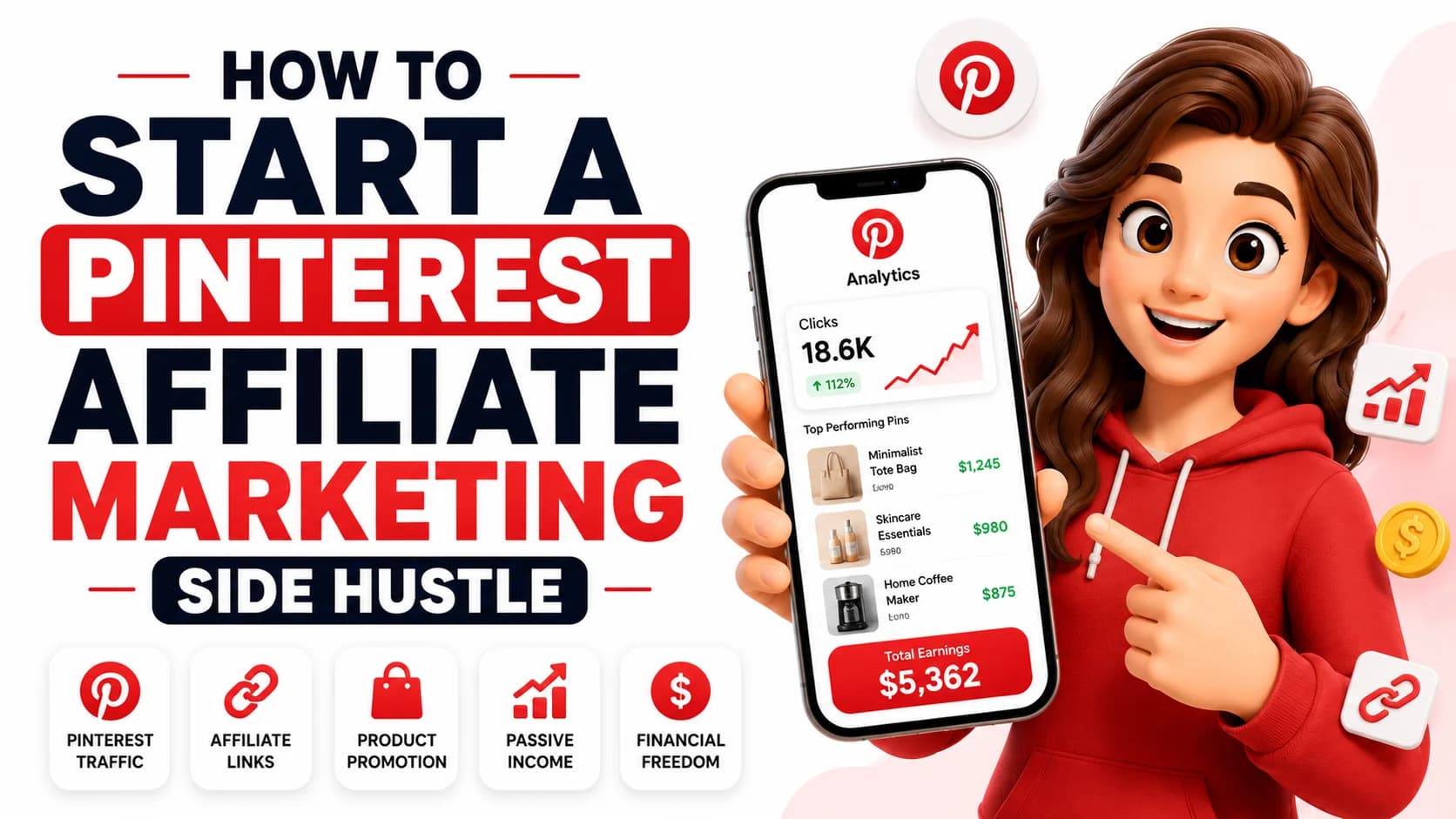
You can get millions of views on Pinterest and still make zero dollars. Sounds impossible, right? It's not. It happens all the time, actually. Accounts pull in huge traffic every month and never see a single commission. Why? Because traffic without an offer behind it is just... traffic. Nothing more. In this blog, we'll walk through how to actually set up a Pinterest account for affiliate marketing the right way so the views turn into money instead of just numbers on a screen.
Step 1: Pick Your Offer First
Before you touch Pinterest at all, you need something to actually sell. Affiliate networks like ClickBank are full of products across pretty much every category, but health, finance, and relationships tend to have the most offers available. And Pinterest's audience skews female and lifestyle-focused, so those niches line up well.
Once you've got an account with a network, browse the marketplace, click into a few offers, and see how the commission works. When you find one that fits, grab your affiliate link and save it somewhere you won't lose it. Notepad, notes app, wherever. And don't go crazy picking ten different offers. Two or three max. Any more than that and your page starts feeling scattered, and Pinterest's algorithm has a harder time figuring out who to show you to.
Step 2: Set Up Your Pinterest Business Account
Business accounts are free, and they unlock analytics you don't get with a personal one. When you're setting it up, Pinterest asks about your focus and your goals. Answer based on your niche. This helps steer what shows up in your feed and what Pinterest thinks your account is about from day one.
For a logo, Canva works great, and you don't need any design skills. Just search their pin templates or logo templates and build off one. Grab a banner image from somewhere like Pixabay, free, with no licensing headaches. And for your bio? Just write it. Actually write it yourself. Look at other accounts in your niche for inspiration, sure; see how they phrase things and what keywords they use. But don't copy their bio and run it through a paraphrasing tool to disguise it. That's still using someone else's writing, just with extra steps. Write something real about what your page is and who it's for.
Step 3: Build Your Link Page
Pinterest only lets you add one website link to your profile. So if you're promoting more than one offer, you need something like a link-in-bio tool to bridge that gap, one link that opens up into a page with all your other links. Most of these are free to start. Set it up, match the colors and vibe to your Pinterest page, and drop that link into your profile's website field. Now your whole funnel is connected. Profile to landing page to offer.
Step 4: Make Actual Content
Here's where a lot of people mess up, and honestly it's the same mistake that account with 5 million monthly views was making. Downloading someone's TikTok, stripping the watermark off, and reposting it on Pinterest is not a content strategy. It's using someone's work without asking. Doesn't matter if you credit them in the caption. That's not permission; that's just a courtesy note after the fact. And Pinterest is getting better at recognizing content like this and just... not pushing it.
The better move, and honestly the more sustainable one, is making your own stuff. Canva's pin templates are a solid starting point for images. For video, use royalty-free footage from somewhere like Pixabay, or better yet, film your own. If you see a trend or format you like on another platform, that's fine, get inspired by it. Just build your own version instead of literally taking someone else's clip. It protects you and it actually performs better long term, because Pinterest favors original stuff now.
Step 5: Post It as an Idea Pin
Idea Pins outperform regular pins by a good margin. They let you mix video, graphics, and text into one dynamic post instead of just a flat image. Add a clear call to action right on the pin itself, something like "tap the link to learn more," then write a title with real keywords in it, add some tags, and write an actual description. All of that helps Pinterest figure out where to show your pin.
Then just keep going. One to three original pins a day. That's it. Doesn't take long once you've got a system down, and consistency matters more here than any single perfect pin.
The Part Nobody Wants to Hear
None of this happens overnight. That account getting millions of views and $0? That's what happens when you build traffic with no plan behind it. Views don't equal money. They never did. What actually moves the needle is original content, matched to an offer people in your niche actually want, funneled through a link that works. Do that consistently and the commissions start showing up. Skip the offer or skip the original content part, and you're just building someone else's traffic number with nothing to show for it.
Affiliate Marketing · October 24, 2026
Back to the front page