How to Build a Personal Brand That Actually Converts
Learn the strategic framework behind personal brand positioning, from niche clarity and audience language to content structure and funnel design.
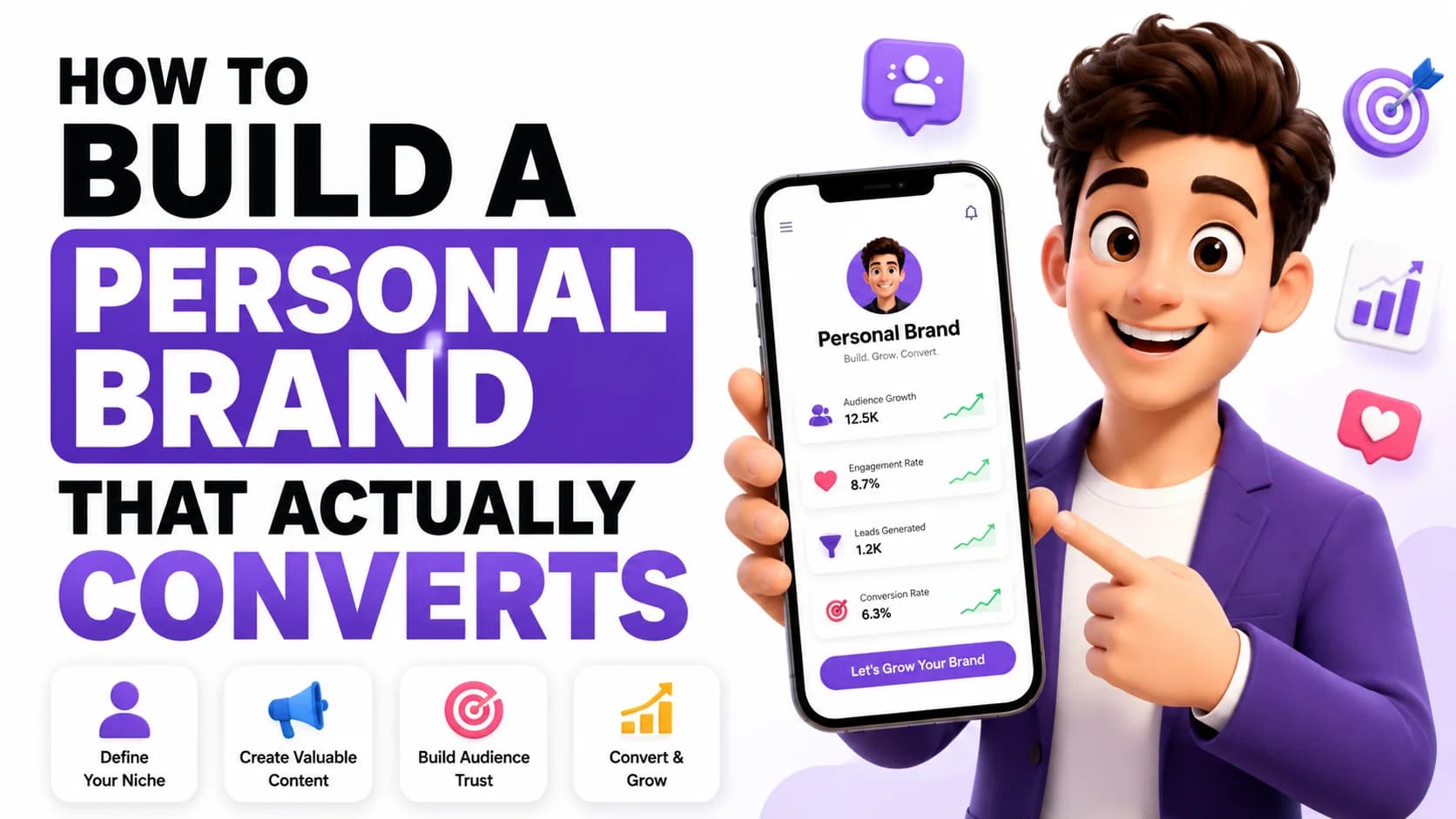
Most personal brands fail for the same reason: the founder is putting out content constantly, but none of it adds up to a clear point of view. People can't tell what the brand actually stands for, so nothing sticks. In this blog, we will break down the strategic layers that separate a personal brand people vaguely recognize from one people actively want to buy from and how each piece connects to the next.
Why Positioning Has to Come Before Content
It's tempting to jump straight into content, email sequences, and posting schedules, but none of that works without a clear foundation underneath it. A founder with strong expertise and inconsistent messaging will still struggle to convert an audience, because the audience never develops a clear picture of what the founder is actually known for. Positioning has to be locked in first; everything downstream—content, offers, and funnels—is just an expression of that positioning.
The Brand Foundation: Why, How, What
A useful starting framework, borrowed loosely from Simon Sinek's well-known model, breaks a brand down into three layers. The why is the underlying belief driving the work, something bigger than the specific service being sold. The "how" is the founder's proprietary method or approach, the thing that makes their process distinct from a generic competitor's. The what is simply the tangible offer or offers built on top of that method.
Founders running multiple business lines, a consulting arm, a software product, and an education component often struggle here because each piece can start to feel disconnected. The strongest brands treat these as a flywheel rather than separate businesses: authority built through one line feeds credibility and demand into the others, rather than each competing for separate attention.
Specificity and Data Are What Build Credibility
Vague, general claims are the fastest way to blend into a crowded market. Founders who lean into specific numbers, years of experience, client outcomes, and methodology names give an audience something concrete to evaluate rather than an unverifiable claim of expertise. Roughly half of any piece of content should function as genuine demonstration, showing the actual thinking or method at work, rather than description alone. Audiences trust what they can see reasoned through, not just what's asserted.
Finding a Niche of One
A niche of one comes from the intersection of three things: what a founder is genuinely skilled at, what they're personally drawn to, and what has real commercial demand. Most founders can identify one or two of these on their own but struggle to see the full intersection clearly without outside perspective since it requires stepping back from the day-to-day work to see the pattern underneath it.
The goal isn't to invent a niche from nothing. It's usually already visible in the founder's actual client history and area of genuine curiosity; the work is in articulating it precisely enough that it becomes instantly recognizable rather than blending into a broader category.
Building an Audience Around a Single Ideal Client
Rather than targeting a broad audience, the strongest personal brands are built around one specific, well-defined client profile: their revenue stage, their existing behavior, their willingness to invest, and their underlying beliefs about how their own problem should be solved.
The most effective source for this isn't guesswork; it's the founder's own sales calls and customer conversations. The exact phrases real clients use to describe their frustration or goal, not a marketer's paraphrase of it, tend to make the strongest content hooks and positioning statements, because prospective clients recognize their own words reflected at them.
Language That Signals Expertise Without Sounding Like Everyone Else
A founder's brand needs a distinct vocabulary, specific terms tied to their own methodology, that a competitor using generic industry language simply doesn't have access to. This isn't about inventing jargon for its own sake; it's about naming a real concept clearly enough that using the term signals genuine expertise rather than borrowed language.
At the same time, the goal is clarity, not complexity. Vague, hedging language, "I feel like growth has been slowing down," reads as uncertain rather than as authoritative. Precise, data-anchored language, still expressed simply, builds far more conviction than corporate phrasing dressed up to sound sophisticated.
Structuring a Multi-Platform Content Mix
Trying to be active everywhere at once from day one is one of the most common ways founders burn out on content before it starts working. A sustainable strategy generally focuses on one or two primary platforms with a defined content mix rather than spreading thin across five.
A workable split for a platform like LinkedIn might look like the majority of content built around proprietary frameworks, a meaningful portion built around client case studies, since people trust proof more than claims, and a smaller portion built around personal point-of-view content, since audiences ultimately connect with a person, not just a methodology.
A second platform, such as YouTube, might lean more heavily into tutorial-style content demonstrating the actual method in action, supported by breakdowns of specific client results and direct interviews or testimonials that reinforce credibility further.
Email as the Ownership Layer
Content builds awareness, but an email list is where that awareness gets converted and owned outright, independent of any platform's algorithm. Email consistently converts at a meaningfully higher rate than social content alone, which makes it the layer most founders under-invest in relative to how much return it generates.
The Offer Stack: Guiding People Through a Sequence
A common mistake is having multiple offers with no clear path connecting them, leaving an audience confused about which product or service actually fits their situation. The fix is treating the entire journey as a single connected sequence: a piece of content leads to a lead magnet, the lead magnet leads to a diagnostic or application step, and that step routes the right person to the right offer rather than presenting every option at once.
A simple growth diagnostic or quiz at the top of the funnel can do a lot of this routing work automatically, helping a prospective client self-identify which offer actually matches their stage rather than requiring a founder to manually sort through inbound interest.
Email Nurture Sequences That Actually Convert
A structured welcome sequence typically splits into two phases. The early days are educational: delivering a diagnostic result, sharing relevant customer stories, and explaining the core methodology in more depth, so the audience understands both the problem and the proposed solution clearly. The later days shift toward more direct calls to action, encouraging a call or consultation booking, since the groundwork of trust and understanding has already been laid earlier in the sequence.
Each email in that sequence is effectively another chance to move a subscriber further along, which is why a well-structured multi-day sequence consistently outperforms a single generic welcome email.
Common Mistakes That Keep Personal Brands Stuck
- Posting consistently without a clear underlying positioning, so nothing compounds into recognition
- Using vague, hedging language instead of specific, data-backed claims
- Trying to be active on too many platforms at once instead of committing to one or two with a clear content mix
- Having multiple offers with no clear sequence guiding people between them
- Treating email as an afterthought instead of the primary conversion layer
Creator Economy · October 24, 2026
Back to the front page