How YouTube Creators Actually Make Money Beyond AdSense in 2026
Learn why top YouTube creators rely on more than AdSense, how watch time drives ad revenue, and how to match monetization to your audience type.
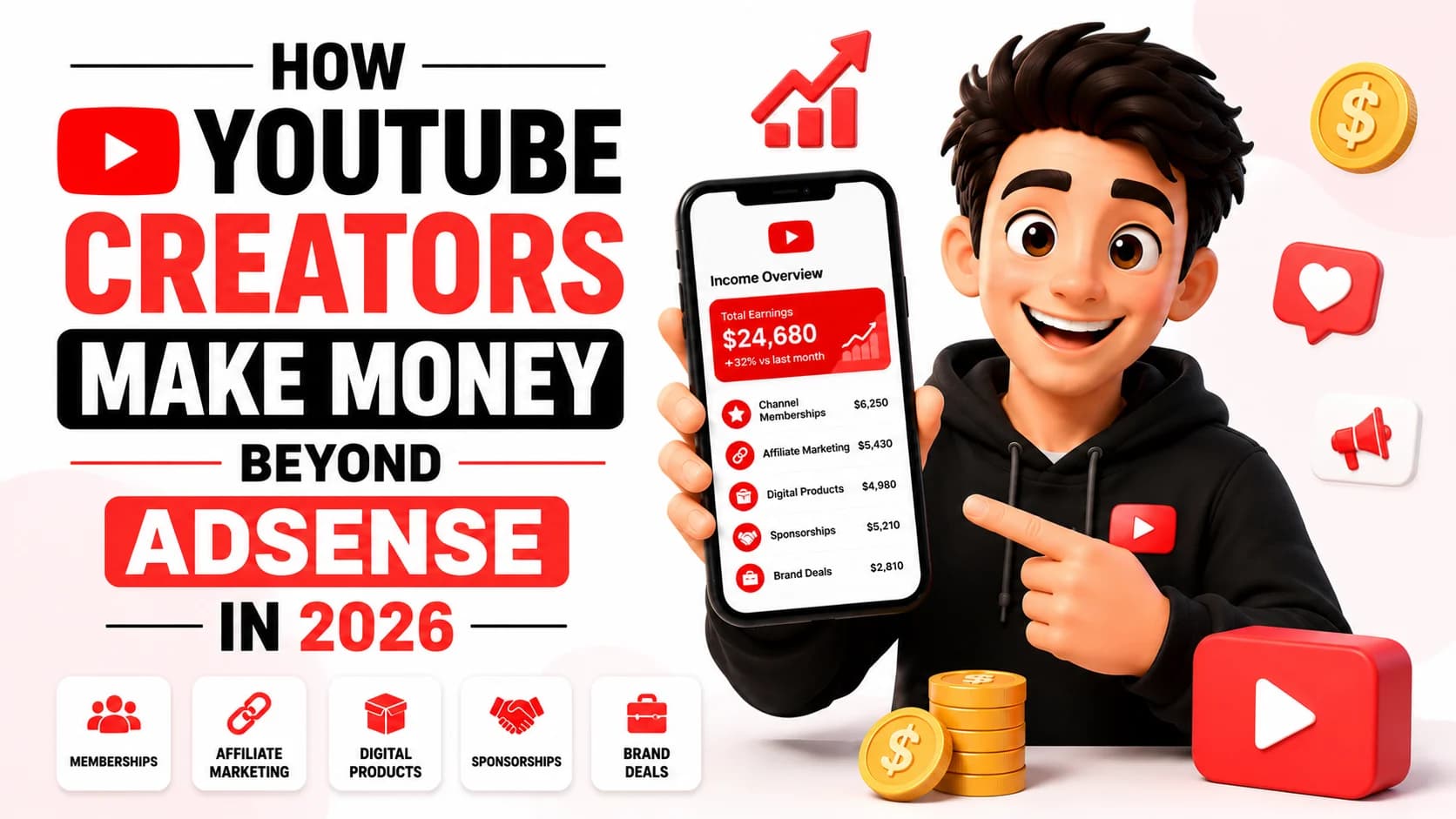
Most people assume a YouTube creator's income comes primarily from ads playing before and during videos. For the majority of successful creators, that's not actually where the money comes from. AdSense can genuinely pay well on a viral hit, but for a sustainable business, it tends to be a supporting piece rather than the foundation. In this blog, we will break down why watch time matters more than raw views, how to match a monetization strategy to your specific audience, and why capturing an audience beyond the platform itself matters more than most creators realize early on.
Why AdSense Alone Is a Risky Foundation
AdSense pays based on views and watch time, but it comes with structural downsides that make it a poor sole strategy. Ad revenue is genuinely unpredictable month to month; advertiser spending fluctuates seasonally, and a channel can see revenue drop significantly during slower advertising periods with no real way to control it. On top of that, YouTube retains a substantial share of total ad revenue generated, roughly half, meaning the public figures often shared about a video's earnings represent only the creator's portion of a considerably larger total.
A channel relying entirely on AdSense is also fundamentally at the mercy of an algorithm and an advertising market it has no control over. Creators who build additional, owned revenue streams alongside ad income are structurally better positioned than those depending on a single, volatile source.
Watch Time Matters More Than View Count
A common misconception is that views alone determine revenue. In reality, watch time, how long viewers actually stay engaged, drives ad revenue far more directly, since longer, more engaged viewing sessions allow for more ad placements and stronger advertiser demand. A video with tens of millions of views but a short runtime and low average watch duration can earn dramatically less than a longer, more engaging video with a fraction of the views. Chasing view count without regard for actual watch time and viewer intent is a common trap, since views alone don't reliably translate into revenue the way engaged watch time does.
Matching Monetization to Your Specific Audience
Not every channel should monetize the same way, and the mismatch between audience type and offer is one of the more common reasons a strong channel underperforms financially.
Large entertainment channels reaching broad, younger audiences, tens of millions of monthly viewers, tend to do well with products that appeal universally: toys, consumer packaged goods, and merchandise. MrBeast's chocolate brand, Feastables, is a clear example of this working at scale: the brand crossed roughly $500 million in annual sales within a few years of launch, built almost entirely on the reach of an existing entertainment audience rather than traditional advertising spend.
Smaller, deeply engaged niche channels can succeed with an entirely different model. A creator teaching a specific craft or skill in detail, without ever going viral, can build a genuinely profitable business selling courses or mentorship directly to a smaller, highly invested audience. The key differentiator isn't audience size; it's how tightly the audience's interest aligns with a specific, sellable transformation.
Community-oriented channels often do well with group-based offers, masterminds, webinars, or cohort-based programs, while primarily educational channels tend to convert well with structured coaching, mentorship, or software products that extend the value already being delivered through free content.
How to Actually Sell Without Feeling Like a Salesperson
A recurring mistake among growing creators is waiting too long to introduce a product, or introducing one without having built any real narrative around it first. The strongest examples of creator-led brands succeed because the product becomes inseparable from the creator's identity, not because of a single promotional push.
Logan Paul's "Maverick" clothing brand is a widely cited example of this: rather than repeatedly announcing new merchandise drops, his content consistently reinforced a specific identity and mindset associated with the brand itself so that by the time a product launched, the audience already felt personally connected to what it represented, reportedly driving especially strong single-day sales at launch.
This works because audiences respond poorly to being obviously sold to. Integrating a product into the actual substance of content; showing prototypes early; involving the audience in decisions like color or design choices; and dedicating real content time to explaining what a product represents rather than just announcing it build far more genuine buy-in than a purely promotional segment ever could.
Product quality matters just as much as the marketing narrative around it. A creator's recommendation carries real trust, and a product that fails to hold up, fading fabric, poor construction, disappointing quality, or damages, damages that trust in a way that's difficult to rebuild, regardless of how well the initial launch performed.
Capturing Your Audience Beyond the Platform
Every platform carries structural risk entirely outside a creator's control: algorithm changes, account restrictions, or policy shifts that can suddenly limit reach or monetization options. Because of this, capturing audience information directly—emails, customer profiles, and order history—through legitimate purchase and signup flows is one of the more durable moves a growing creator business can make.
A customer base built this way becomes an asset independent of any single platform's health. Future product launches can be marketed directly to an existing customer list rather than depending entirely on fresh algorithmic reach, meaningfully de-risking the business against any single platform's volatility.
Beyond Products: Experiences and Licensing
Physical products aren't the only path. Large creators have increasingly moved into live experiences and licensing as additional revenue layers. MrBeast's branded theme park venture in Saudi Arabia and Dude Perfect's international live touring shows are both examples of turning an existing audience into in-person revenue, sometimes reaching a point where a single touring show generates comparable revenue to a video upload with meaningfully less ongoing production effort.
Licensing existing content is another avenue worth understanding, even for creators not yet at that scale. Mark Rober's science-focused content, for instance, has been adapted into a Netflix series, which reached the platform's own top-10 rankings for a period, demonstrating how existing video content and format can be repackaged and monetized through an entirely separate platform relationship.
Why This Compounds Over Time
Video content, unlike a lot of other media, keeps generating value well past its original publish date. A well-performing video from years earlier can continue accumulating both watch time and ad revenue with essentially no ongoing effort, functioning as a compounding asset rather than a one-time push. This is part of why a diversified, patiently built content library tends to outperform a strategy focused purely on repeatedly chasing the next viral hit.
Creator Economy · October 24, 2026
Back to the front page