How Creators Actually Make Money on Facebook Reels in 2026
A realistic look at how Facebook Reels monetization actually works in 2026, what it pays, and the audience strategy that actually moves the needle.
Facebook's been throwing real money at creators lately, and a lot of people assume it's some kind of loophole or special program. It's not. Facebook wants people staying on the platform longer, and paying creators to make that happen is just good business for them. But the "hundreds of dollars a day" stories floating around need some actual context, because the way Facebook pays creators changed a lot recently, and most of the hype skips right past that.
What Facebook's Monetization Actually Looks Like Now
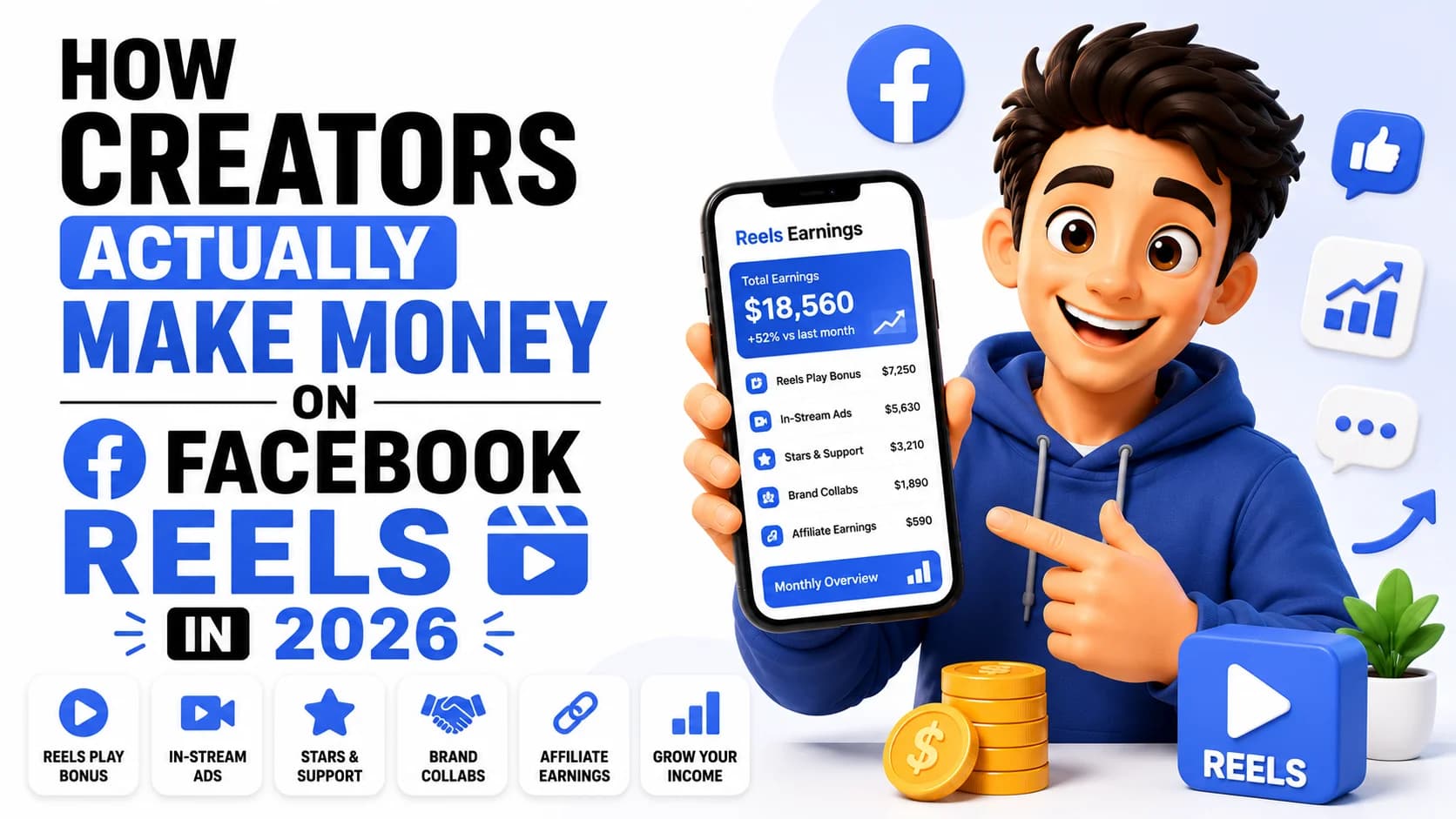
Here's the update a lot of older advice missed: Facebook shut down its old separate programs, the standalone Reels Play bonus and the old Performance Bonus, back in August 2025. In their place is one unified system now, Facebook Content Monetization, which bundles in-stream ads, ads on Reels, tips through Stars, subscriptions, and performance bonuses into a single payout.
That means there's no flat "per view" rate anymore. Your payout depends on qualified views (generally 3+ seconds for a Reel), how original the content is, audience location, and engagement quality. And Facebook's actually been serious about the originality part since March 2026; unoriginal or reposted content can get demonetized outright. Not just deprioritized. Demonetized.
To even qualify, you generally need a page or professional profile with at least 5,000 followers, plus either 60,000 minutes of watch time in the last 60 days or a handful of active Reels posted in the last 30. Worth checking your exact numbers in Meta Business Suite since eligibility details shift.
On actual pay: realistic RPMs for Reels run somewhere between $0.02 and $0.20 per 1,000 qualified views, which sounds tiny until you realize Facebook paid out almost $3 billion to creators in 2025 alone, up 35% from the year before, with 60% of that going straight to Reels. So the money's real. It's just spread across huge volume, not a flat bonus you collect per view.
Why Something This Simple Can Go Viral
People scroll fast. Something has to make them stop: a weird image, something funny, something unexpected. And here's the thing about Facebook specifically: shares matter more here than almost anywhere else. When someone reshares a post, it lands in front of a completely fresh audience that has nothing to do with the original page's followers. One heavily reshared post can genuinely outperform dozens of "normal" posts combined.
None of this is random, though, even when the content looks dead simple. Facebook's algorithm reads shares, comments, and reactions as signals to push content further. Understanding what actually triggers those reactions is the real skill here, not just posting whatever and hoping.
Thinking About Who You're Actually Reaching
Not every age group behaves the same on Facebook, and this matters more for strategy than people usually give it credit for. Younger users, especially in the 25 to 35 range, tend to lurk. They scroll, read, absorb, and move on without clicking or commenting much. Older demographics tend to engage a lot more actively; they'll comment, share in family group chats, and click through to actual links far more readily.
If you're trying to build a page around driving engagement and eventual monetization, that behavioral gap matters. A page built purely around a younger, quieter audience is going to look dead on paper even with real reach, while a page reaching an older, more vocal audience can look smaller but perform way better on the metrics that actually drive both algorithmic reach and revenue.
What an Ideal Audience Actually Looks Like
If you were designing the perfect audience from scratch, a few traits matter most. First, underserved, meaning not a lot of other creators are already targeting them well. Second, be genuinely willing to engage, comment, share, and react, since none of that happens with a passive audience. Third, some actual purchasing power if part of your strategy involves sending traffic anywhere off-platform. And fourth, a bit opinionated. People who like to debate (respectfully) tend to drive way more comment activity, which the algorithm reads as a strong engagement signal.
The Copycat Problem
Here's the part that burns a lot of creators. Once something works, it gets copied fast. Dozens of pages jump on the same format within days, and the whole thing burns out. Trends have a shelf life, and the more pages piling onto the same idea, the faster engagement and earnings drop off across the board for everyone doing it.
The actual fix isn't chasing whatever's currently working. It's finding a genuinely underserved niche, a hobby, an interest, or a community that's passionate but hasn't been served good content yet. Facebook rewards pages that fill a real gap, because it keeps that specific audience on the platform longer, which is the entire point from Facebook's side.
What the Data Actually Shows
Facebook's own transparency reporting shows something worth paying attention to: most feed views come from posts that don't include outbound links. Facebook's business model depends on keeping people on the platform, so it makes sense they'd favor content without an obvious exit ramp. This is exactly why heavily link-driven posts tend to underperform compared to native content that keeps people scrolling and engaging inside the app itself.
The biggest pages tend to follow a consistent pattern: alternating between video and static image posts, simple and readable descriptions, and training their audience to engage first before ever pushing a click-through. Even when they do eventually drive traffic somewhere off-platform, it's done carefully: engage first, ask second.
Putting It Together
Making real money here isn't about posting randomly and hoping something takes off. It comes down to understanding how Facebook actually distributes attention now under the unified monetization system, finding an audience that's underserved and genuinely engaged, and creating content built around shares and reactions rather than just view count. Do that consistently and keep content original, and the current system is set up to actually reward it.
Creator Economy · October 24, 2026
Back to the front page