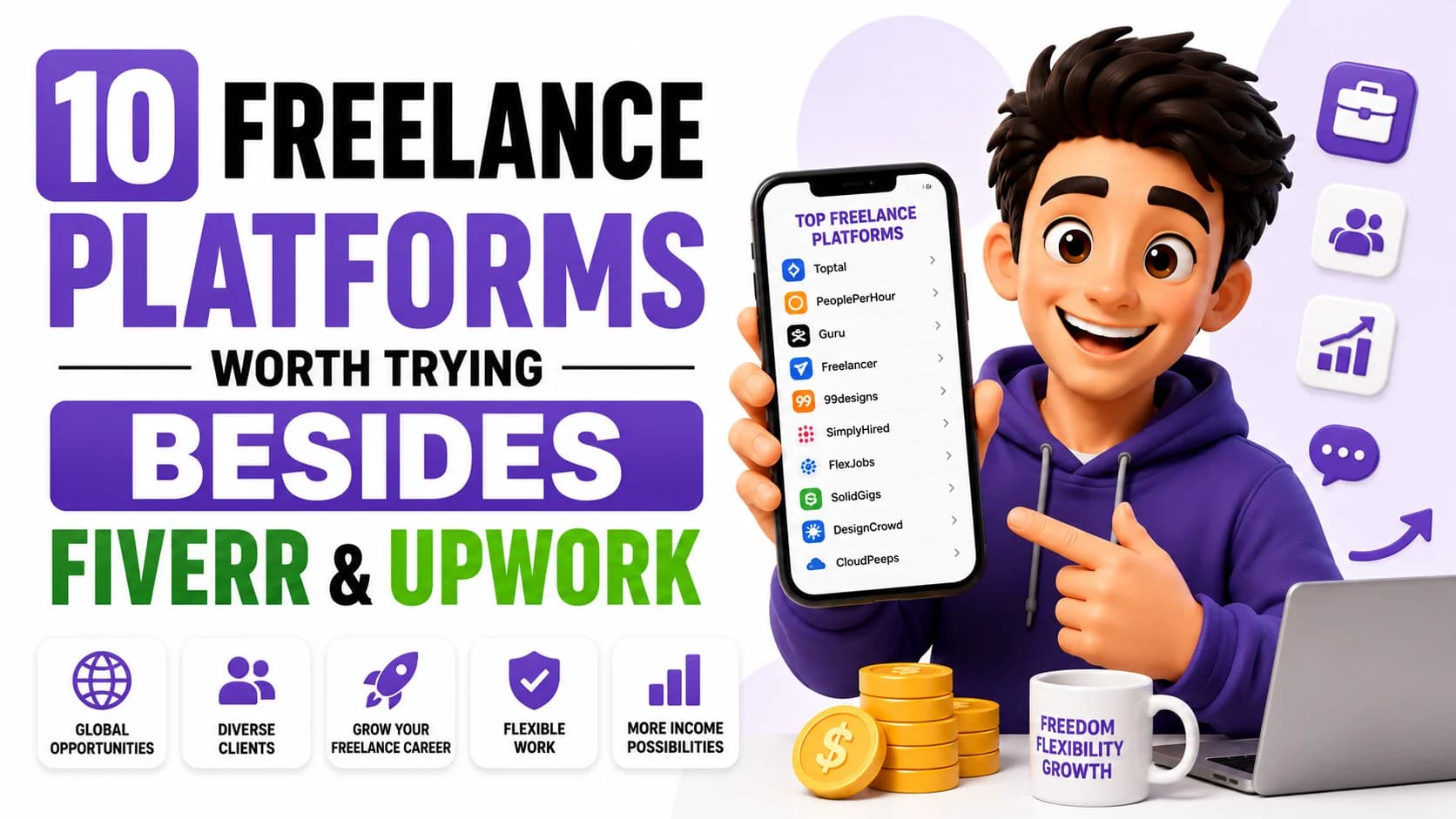
10 Freelance Platforms Worth Trying Besides Fiverr and Upwork
Beyond Fiverr and Upwork, here are legit freelance platforms worth signing up for, plus how to actually stand out and start earning on them once you land.
Everyone tells you to start freelancing on Fiverr or Upwork. Fair enough, they're the biggest names. But they're also the most saturated. If you're brand new, have no reviews, and have no portfolio yet; breaking in there is genuinely rough. So here's a rundown of other platforms actually worth putting your profile on, plus what actually gets you jobs once you're there.
Quick note before the list: don't expect instant riches from stacking a bunch of profiles. The real value here is more shots on goal, more places where the right client might stumble onto your profile, not some guaranteed math where more platforms automatically mean more income. It still comes down to how well you position yourself on each one.
Latium
Latium's been around a while, and people are still landing jobs there. Head to the job board once you sign up (Google, Facebook, or Apple login all work), and you'll see postings across a bunch of categories: digital product sales, backlink work, and all sorts. You bid on jobs like most marketplaces work. Nothing complicated, just sign up and start browsing.
Freelancer.com
Kind of underrated, honestly. Plenty of people are doing well here without ever touching Fiverr. Sign up, click into the "earn money freelancing" section, and set up your profile. The one thing that actually matters here, and everywhere else on this list, is niching down hard. Don't list yourself as "a writer." List yourself as someone who does sales copy or ad copy or biography writing specifically. Vague listings get buried. Specific ones get found.
PeoplePerHour
Sign up, choose "I want to work as a freelancer," fill in your info, and you're in. Decent volume of jobs here, and it's a genuine platform to scale from once you've got some momentum going.
Toptal
Toptal skews toward more experienced professionals, but don't count yourself out just because it sounds intimidating. Apply as talent, fill in your info, and put your actual best foot forward. If you've got real skill, it's worth applying.
Guru.com
One of the older platforms in this space, and because of that, way fewer people actually think to use it. Less competition for you. Same deal as everywhere else: sign up, build out your profile around a specific niche, and keep an eye on your email so you don't miss offers when they come in.
SEO Clerks
This one's a bit different. You can use it even without a specific skill, essentially outsourcing work you land elsewhere and delivering it through here (also known as drop servicing). But if you do have a skill, you can list it directly and build from there too.
Kwork
Kwork works a lot like Fiverr's format, with gig-based listings starting at a set price. It's got a genuinely large user base and can be a solid alternative if Fiverr's saturation is wearing you down. One thing worth knowing: like any open marketplace, there have been reports of bad actors running scams on there, so vet who you're working with before sending any money, same as you would anywhere else online.
Truelancer
It's less talked about than the big names, but it's real, and it works the same basic way: sign up, build a niche-focused profile, and let your listing rank up over time so people keep seeing it in the marketplace.
FlexJobs
Sign up, build your profile once, and just stay active. You don't need to babysit it daily; just check your email regularly for invitations and offers as they come in.
99designs
If you're a designer, this one's specifically built for you. Scroll to the bottom of the site, find "become a designer" under resources, and apply to join. It's a solid platform that a lot of general freelancers don't even know exists.
The Actual Strategy Here
None of these platforms work if you show up with a vague, generic profile. The pattern across literally every one of them: nailing down a specific niche gets you seen, results, and repeat work. A generalist profile competes against everyone. A specific one, "email newsletter copywriter for SaaS companies," instead of just "writer," stands out immediately because there's way less competition directly against that exact positioning.
Set your profile up once on each platform, keep it updated, and just stay consistent about checking for offers. You don't need to actively work all ten every single day. You need to exist on enough of them that opportunities can actually find you.
Freelancing & Careers · October 24, 2026
Back to the front page